Marzena Ugorna Farm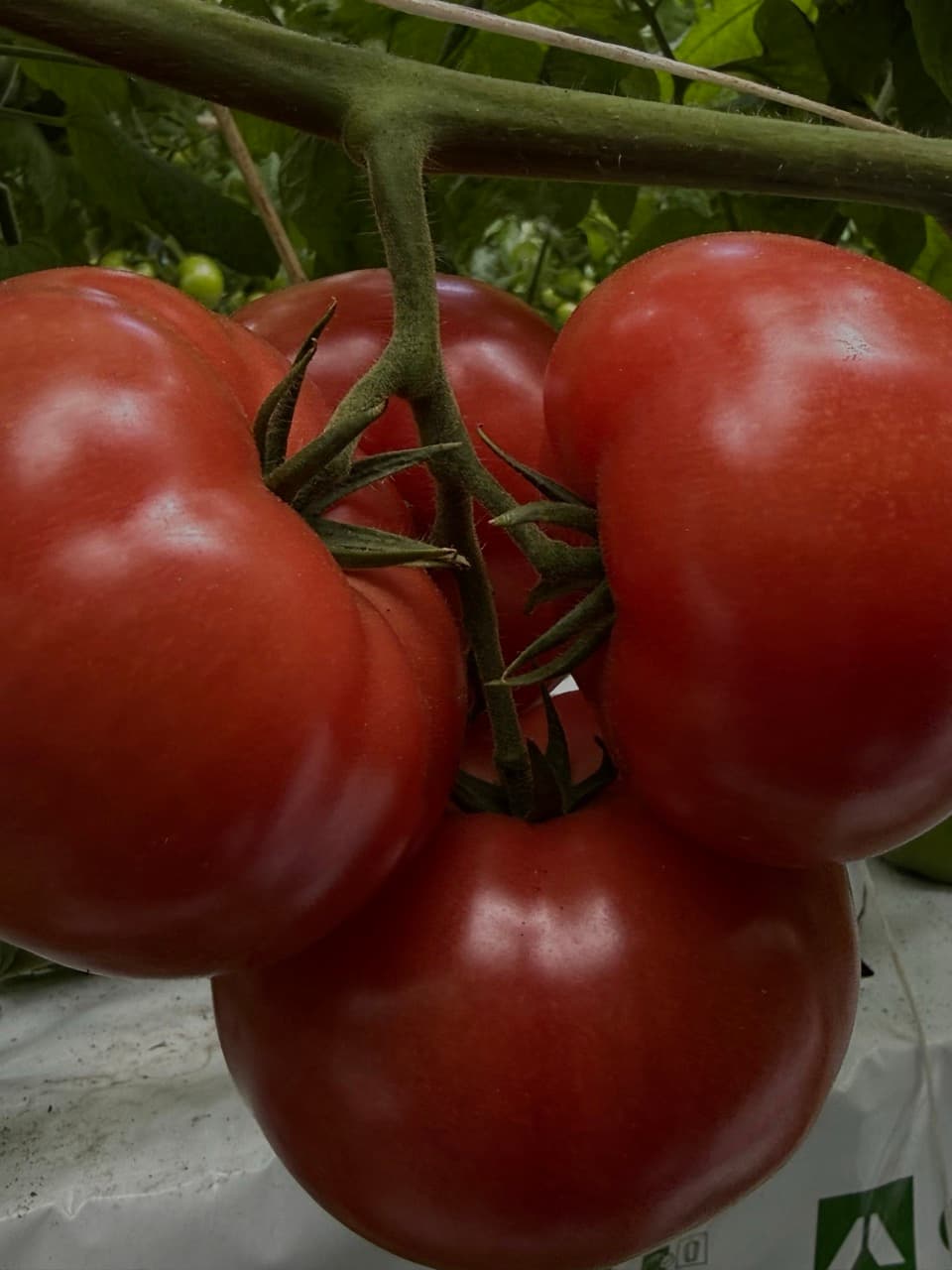
The name and origin
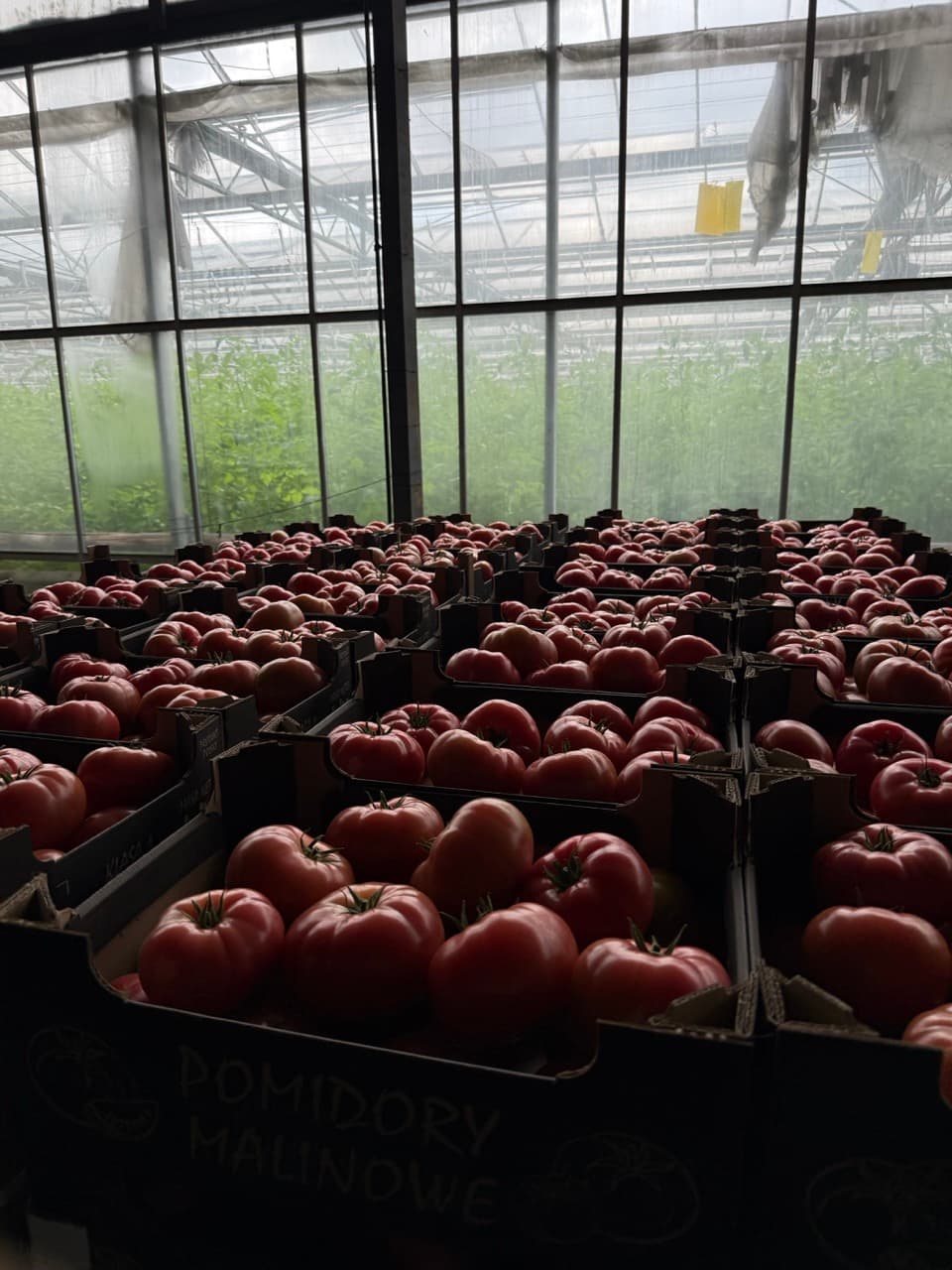
Malinowe (from "malina," the Polish word for raspberry) refers not to a single standardised variety but to a group of tomatoes sharing specific characteristics: a distinctive pinkish-crimson skin, lobed or ribbed fruit, thin skin, very little gel, and an intensely complex flavour profile.
These characteristics were traditionally found in heritage varieties grown in Polish and Central European gardens. As interest in flavour-forward produce has grown among chefs and consumers, specialist growers have worked to develop and stabilise malinowe varieties suited to greenhouse cultivation.
Flavour profile
The flavour of a good malinowe tomato is what distinguishes it most sharply from standard commercial varieties. It is intensely sweet, with a pronounced acidity that provides balance — what food writers sometimes describe as "the most tomato-like of tomatoes." The aromatic compounds are rich and complex, with notes of garden herbs and fruit.
The thin skin means the flavour hits immediately without resistance. The low gel content means the flesh itself carries most of the taste, rather than the liquid surrounding the seeds. This makes malinowe particularly rewarding when eaten simply — sliced, with salt and good oil.
Growing challenges
Malinowe varieties are more demanding to grow than standard commercial tomatoes. The thin skin makes them prone to cracking if irrigation is inconsistent. The plants require careful management of temperature and humidity to prevent fungal problems. Yields are lower than standard varieties.
These challenges are precisely why malinowe tomatoes grown well are so special. The care required to produce them is encoded in the result. Growers who take the shortcut do not produce the same fruit.
In the kitchen
Malinowe tomatoes are at their best eaten raw — their delicate skin and intense flavour are somewhat diminished by cooking. They shine in salads, on bruschetta, as a garnish for fine dishes, or simply sliced with salt and cold-pressed oil.
Their appearance — ribbed, irregular, with a characteristic blush — also makes them among the most visually striking tomatoes on a plate. Many chefs who use them cite the visual quality as equally important to the flavour.
Availability and season
In Poland, the peak season for outdoor-grown malinowe is July through September. Greenhouse cultivation extends the season somewhat, but the best malinowe are still produced during the long natural light hours of summer.
Because of their fragility and limited shelf life, malinowe are rarely found in supermarkets. The best sources are specialist growers, farm shops and restaurants that maintain direct supplier relationships. Quality cannot survive the standard supermarket supply chain.
Frequently asked questions
- Where can I buy malinowe tomatoes in Poland?
- Malinowe tomatoes are best sourced directly from specialist greenhouse growers, at farmers' markets, or through restaurants and specialty food stores. Their delicate nature means they are rarely available in supermarkets. In Greater Poland, local producers around Kalisz and Poznań are a reliable source during summer months.
- How are malinowe different from standard beefsteak tomatoes?
- Standard beefsteak varieties are bred for size, shelf life and appearance uniformity. Malinowe are bred purely for flavour. The differences include: thinner skin, lower gel content, more complex aromatic profile, characteristic ribbing and a pinkish-crimson rather than uniformly red colour.
- Can malinowe tomatoes be grown in a home garden?
- Yes, though they require consistent watering and warm temperatures. In Poland, they do best planted after the last frost (mid-May) in a warm, sheltered spot or in a greenhouse or polytunnel. Choose a quality seed variety marketed as malinowe or "pink beefsteak" type.
Enquire about our malinowe tomatoes for restaurant supply.
Get in touch →