Marzena Ugorna Farm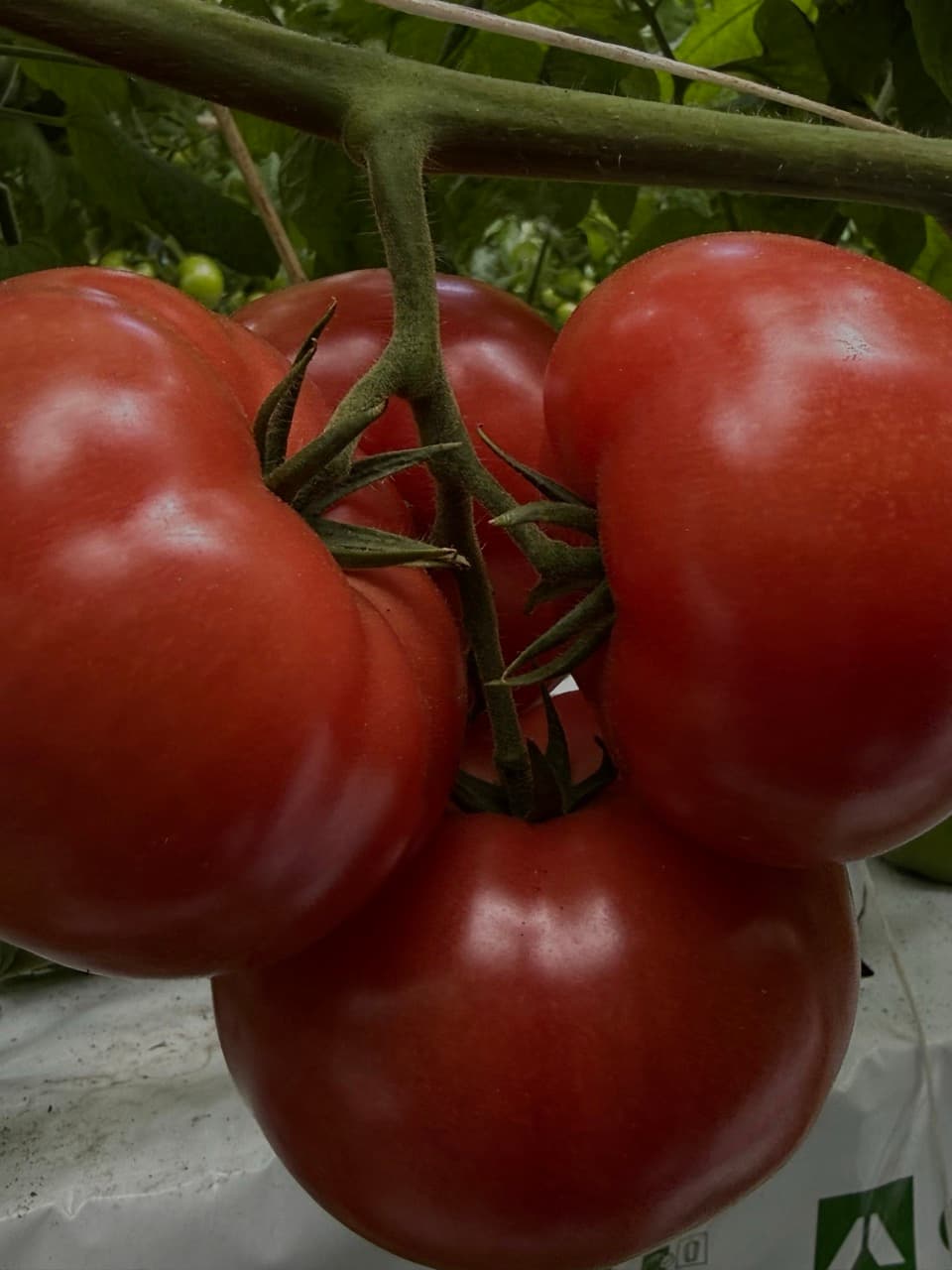
Colour and appearance
A fresh tomato has uniform, vibrant colour that reaches all the way to the stem. A pale green ring around the stalk is often a sign the fruit was harvested before reaching full ripeness — common in tomatoes that travel long distances.
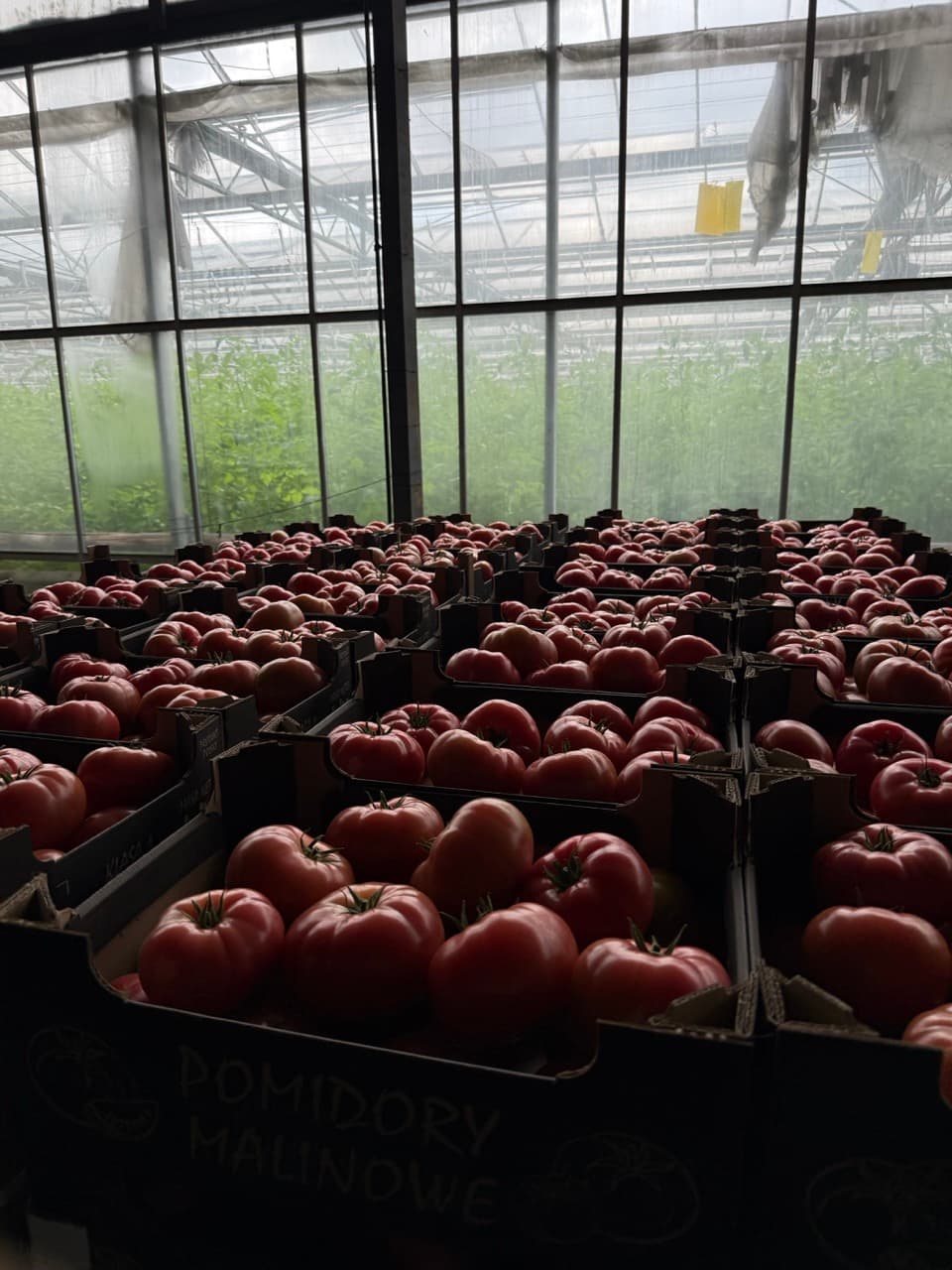
Look for skin that is taut, smooth and slightly glossy. Dullness, wrinkles or soft patches are all early signs of age. For variety-specific freshness, malinowe tomatoes should show their distinctive crimson-pink blush, not a uniform red.
The aroma test
Nothing reveals freshness more honestly than smell. A truly fresh tomato should have a green, leafy aroma at the stem, and a sweet, slightly acidic fragrance from the flesh. If you smell nothing, the tomato has likely been stored at too low a temperature — below 12°C suppresses aromatic compounds permanently.
Cold storage is one of the most common ways freshness is lost in the supply chain. Tomatoes that have been refrigerated for extended periods rarely recover their original aroma even when brought back to room temperature.
Texture and firmness
A fresh tomato yields slightly to gentle pressure without feeling soft. The skin should be resilient but not hard. Overripe tomatoes feel waterlogged; underripe ones resist any pressure and lack sweetness.
When cut, the flesh should be dense and juicy, with clearly defined locules (the seed chambers) and firm, bright gel. Watery, pale flesh or large hollow cavities suggest either poor growing conditions or harvest too far from peak ripeness.
Origin and supply chain
Where a tomato comes from, and how long it has been travelling, matters more than most consumers realise. A tomato picked today and sold tomorrow in a local market will always have an advantage over one picked green three weeks ago in another country.
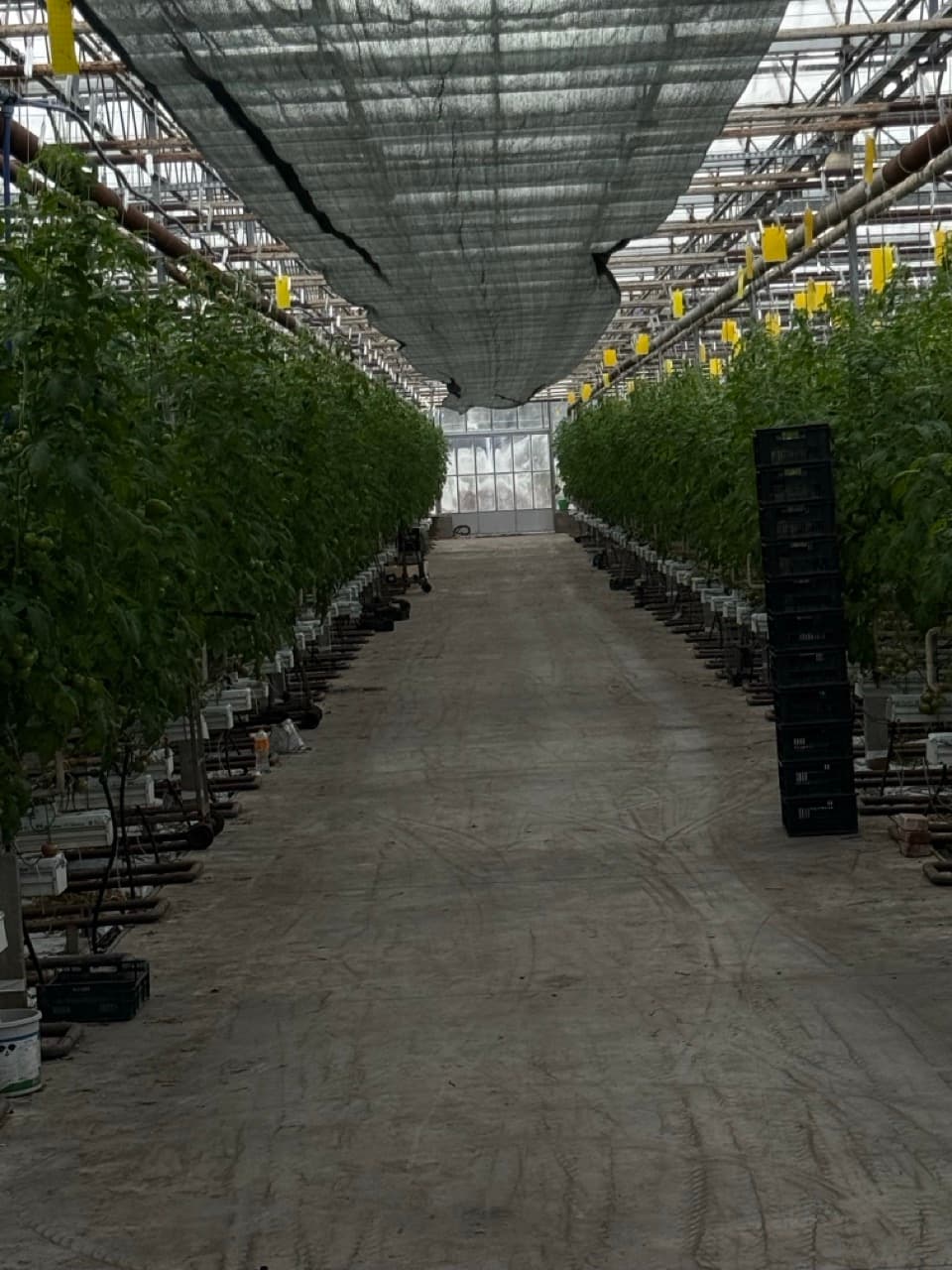
Greenhouse tomatoes grown close to the point of sale — as ours are, near Kalisz in Greater Poland — can be harvested at full ripeness because they do not need to withstand long transport. This is the single largest factor in flavour quality.
What to avoid
Avoid tomatoes with any signs of cracking, mould at the stem end, or an artificially uniform red colour that seems painted on. Very heavy tomatoes for their size often indicate excessive irrigation during growing, which dilutes flavour.
In supermarkets, tomatoes sold in sealed plastic trays tend to deteriorate faster because moisture accumulates. Loose tomatoes or those sold on the vine are generally better preserved.
- Green ring around the stem — harvested too early
- No aroma — stored below 12°C
- Uniform, saturated red — ethylene-ripened post-harvest
- Watery, pale flesh — over-irrigated
- Cracking or mould — age or handling damage
Frequently asked questions
- How can I tell if tomatoes are fresh at a market stall?
- Smell them first — fresh tomatoes have a distinctive green, leafy aroma at the stem. Then press gently: they should have slight give without being soft. Look for uniform colour without pale patches, and if possible, ask when they were harvested.
- Do greenhouse tomatoes stay fresh longer than field-grown?
- Not necessarily longer, but they can be harvested closer to peak ripeness because they do not need to travel as far. A locally grown greenhouse tomato picked at full maturity will often have better flavour and similar shelf life to a field-grown tomato harvested earlier for transport.
- Why do supermarket tomatoes often have no flavour?
- Most supermarket tomatoes are harvested before full ripeness so they can withstand long-distance transport and extended shelf time. They are often ripened with ethylene gas after harvest, which produces colour but not the sugars and aromatics that develop on the vine.
- Should tomatoes be kept in the fridge?
- No. Refrigerating tomatoes below 12°C permanently destroys their aromatic compounds and causes textural deterioration. Store tomatoes at room temperature, stem-side down, and consume within 3–5 days of purchase.
Discover our tomato varieties and how we grow them.
Get in touch →